Hyperbaric Oxygen Chambers: The Physics, Technology, and History of Pressurized Environments
The Short Version
A hyperbaric chamber is an enclosed environment designed to operate at a pressure higher than normal atmospheric pressure.
By controlling the internal pressure and oxygen conditions, these systems create a specialized pressurized environment. Understanding how pressure and gases behave is essential to understanding the basic principles behind hyperbaric chamber technology.
Two important scientific principles help explain these environments: Henry's Law and Boyle's Law.
The Physics: Henry's Law and Gas Solubility
In 1803, English chemist William Henry described what is now known as Henry's Law.

This principle explains that, at a given temperature, the amount of gas that dissolves in a liquid is proportional to the partial pressure of that gas above the liquid.
In simple terms, changes in gas pressure can affect how much gas dissolves in a liquid.
This principle is an important part of understanding gas behavior in pressurized environments.
When discussing hyperbaric chamber technology, several factors are relevant:
Ambient pressure
Oxygen concentration
Gas partial pressure
Operating temperature
Chamber design and configuration
These factors work together to determine the characteristics of the internal environment.
Understanding Atmospheric Pressure: What Does ATA Mean?
ATA stands for Atmospheres Absolute. It is a unit used to describe absolute pressure, including the surrounding atmospheric pressure.
For reference:
PressureDescription
1.0 ATAApproximately normal atmospheric pressure at sea level
2.0 ATAApproximately twice normal atmospheric pressure
3.0 ATAApproximately three times normal atmospheric pressure
The actual operating pressure of a hyperbaric chamber depends on its model, design, and specified operating conditions.
Understanding ATA values helps customers compare different chamber configurations and technical specifications.
Boyle's Law: Understanding Gas Volume Under Pressure
Another important principle is Boyle's Law.
This law describes the relationship between the pressure and volume of a gas when temperature remains constant.
In simple terms, as pressure increases, the volume of a given amount of gas decreases. As pressure decreases, its volume increases.
This relationship is fundamental to understanding gas behavior in enclosed pressurized environments.
Boyle's Law is also an important concept in diving science, pressure management, and the engineering of pressurized equipment.
The History of Hyperbaric Technology
The study of pressurized environments has a history spanning several centuries.
Early experiments involving pressurized chambers helped scientists and engineers better understand the relationship between pressure, gases, and enclosed environments.
Over time, developments in pressure control, chamber construction, monitoring systems, and oxygen delivery technology contributed to the development of modern hyperbaric chamber equipment.
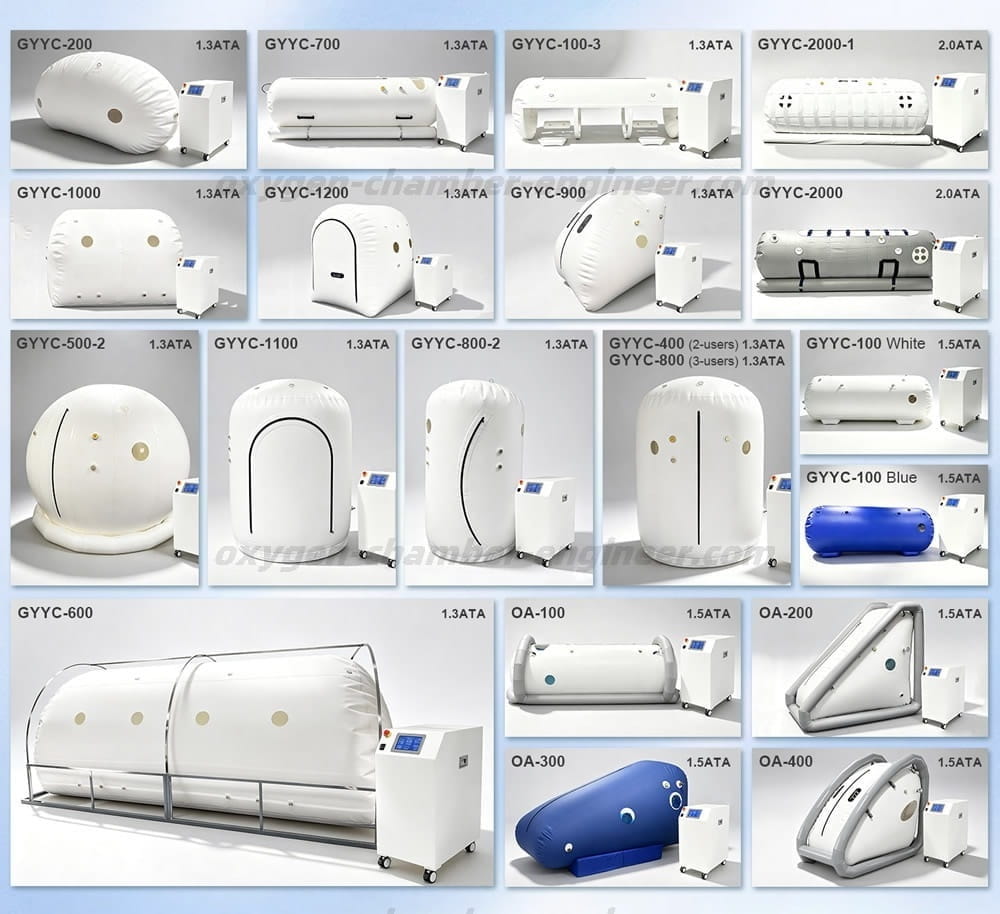
Today, hyperbaric chambers are available in different configurations, including soft-shell and hard-shell designs, with variations in size, structure, pressure specifications, and operating systems.


(Disclaimer: Respect originality, the copyright of images and text belongs to the original author!)
(Manufacturer of hyperbaric oxygen chamber Whatsapp:)